Frequent Feeds: Babies feed for all kinds of reasons. There really is no reason to differentiate between hunger, tired, fussiness. If they have a clean diaper and they are fussy, always offer the breast first. This not only calms them down in the fastest way, but it provides an opportunity to gain weight. It is not a good practice to try and distract baby from feeding using pacifiers, rocking, or swaddling. The exceptions to this is that you need a few minutes to get ready for a feed, reset from already trying to breastfeed, or quickly settle them into a new sleep space – preferably into another adults arms so they sleep longer! Distraction shouldn’t be a tool used to skip or prolong the next feeding.
Short Naps: If these short naps are occurring after you set them down in the crib or bassinet, then thats the answer. Don’t set them down! Baby’s love to be held, it’s how they are designed. Babies also sleep better when they are connected to mom or someone that loves them. This can make for a very frustrating situation if you want your child to sleep independently.
Babies are designed to protect themselves. They know when they feel safe and when they don’t. It’s no mistake that a crying baby spikes our cortisol levels. Crying is an alarm meant to tell parents, “Hey, I need something!” If the only way to shut off the alarm is to be held, then that’s exactly what you should do.
No feeling of fullness: The feeling of fullness in the breasts will eventually fade as your supply regulates around 6-8 weeks. You can read my blog, Regulating Milk Supply, so you have a greater understanding. Essentially, the feeling of fullness decreases when your body becomes more efficient at making milk while baby is drinking. It learns to know exactly how much baby needs and can respond efficiently. This means your body ends up storing less milk and making it while baby is drinking.
If you have the feeling of fullness beyond 6-8 weeks, this could be a sign that you are not removing milk from your breasts frequently or efficiently enough and your body will begin to make less and less milk. This is especially true if you go overnight without any milk removal. Removing milk at night when baby needs it is crucial to maintaining your milk supply and avoiding complications such as clogged ducts, mastitis or breast abscesses.
Your breasts don’t leak anymore: This again is a result from your body being able to regulate the milk supply.
Evening witching hour: Prolactin (our milk making hormone) is highest in the morning and gradually decreases throughout the day. By the time evening comes, prolactin is at its lowest. This results in babies feeding more frequently and sporadic. If a baby is forced onto a schedule or expected to feed or sleep for a specific time, this can cause baby to become very distressed and hungry because prolactin simply isn’t as abundant.
The best thing to do during the witching hour is to continue watching for hunger cues, use compressions to increase milk flow to baby, and switch sides multiple times. However, this routine will occur for what seems like for a few hours because all baby wants is the breast. This is normal and as long as there is no maternal nipple pain, and baby settles at the breast the majority of the time, it’s best for baby to stay drinking at the breast.
NOTE: If you are transitioning from bottle to breast, it is important to be patient with your baby and they may not be ready to handle the witching hour without their original method of feeding. Practice switching breasts a few times, but if baby becomes in distress, give baby their milk in the bottle to settle them.
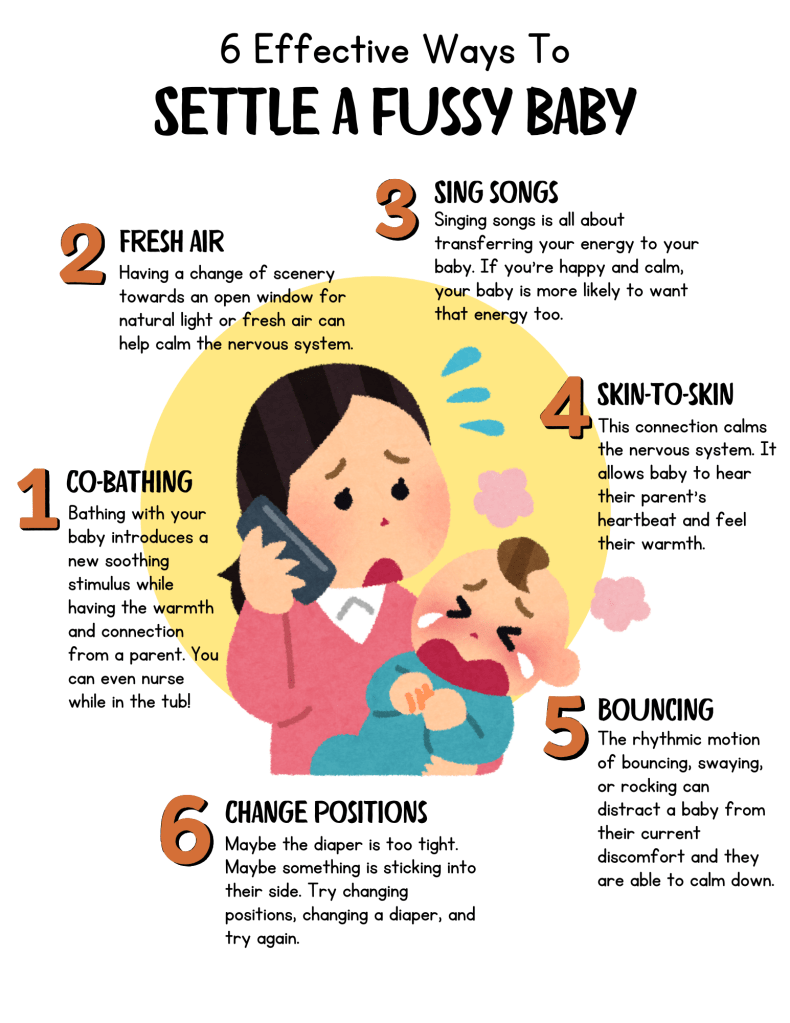
Some ways you can get through the witching hour if baby becomes fussy at the breast and switching and compressions no longer work is to go near an open window, get some fresh air, change a diaper, sing a song, bounce on a yoga ball, or take a warm bath together (not separate). After a few minutes and allowing baby to have a change in scenery or stimulus you can then resume breastfeeding and see if baby is willing to come to the breast again.
 Peace Of Motherhood
Leave a comment