When I had my first baby, I was desperate to increase my milk supply but every time I would pump I got nothing (FYI: This was actually an issue with my flange size, but what I did instead hurt my supply even more). I had always heard frequent milk removal is important for milk supply but I would get more milk if I waited longer. I was encouraged by the larger volume in the bottle that I disregarded frequent milk removal practices. This worked for a few days, but after just a short while, my milk supply plummeted.
So what happened? Why was I getting more if I waited longer and then all of a sudden my milk supply dropped almost to nothing? Below is a flow chart designed to help you understand the process of milk making a little better. And no matter how much more you get by waiting longer, this will always have a negative effect on your milk supply.
After birth, our brain releases a hormone called prolactin. This prolactin travels through the bloodstream and reaches the breasts. It then attaches to prolactin receptors on the alveoli (small sacs used to make and store milk). Once prolactin attaches to the receptors, it is like a key in locket, and the alveoli begins to synthesize milk.
We are meant to remove this milk as frequently as baby needs it. If milk is not removed frequently enough, the alveoli sacs expand as they reach their maximum capacity. The receptors change shape inhibiting prolactin to bind. If the receptors don’t bind, and no further milk synthesis occurs. A signal is sent back to the brain that there was too much prolactin released and to release less next time. If this loop continues because milk is constantly being stored, rather than being removed, then milk supply continues to decrease.
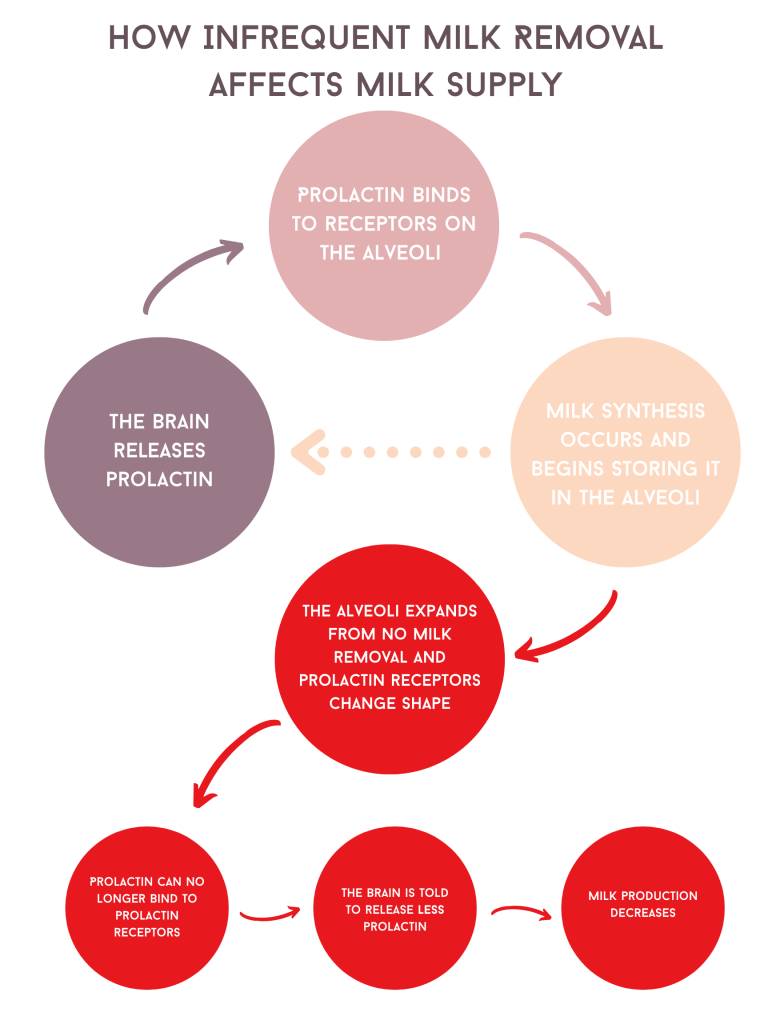
This is why frequent milk removal (especially at night when prolactin is highest) is crucial to establishing and maintaining milk supply. You can read more on my blog Regulating Your Milk Supply to learn more.
 Peace Of Motherhood
Leave a comment